Crypto Social Media Design: A Practical Playbook for Web3 Brands
Crypto social media design is not about making every post louder. It is about creating assets that people can understand, trust, and share quickly in crowded Web3 feeds.
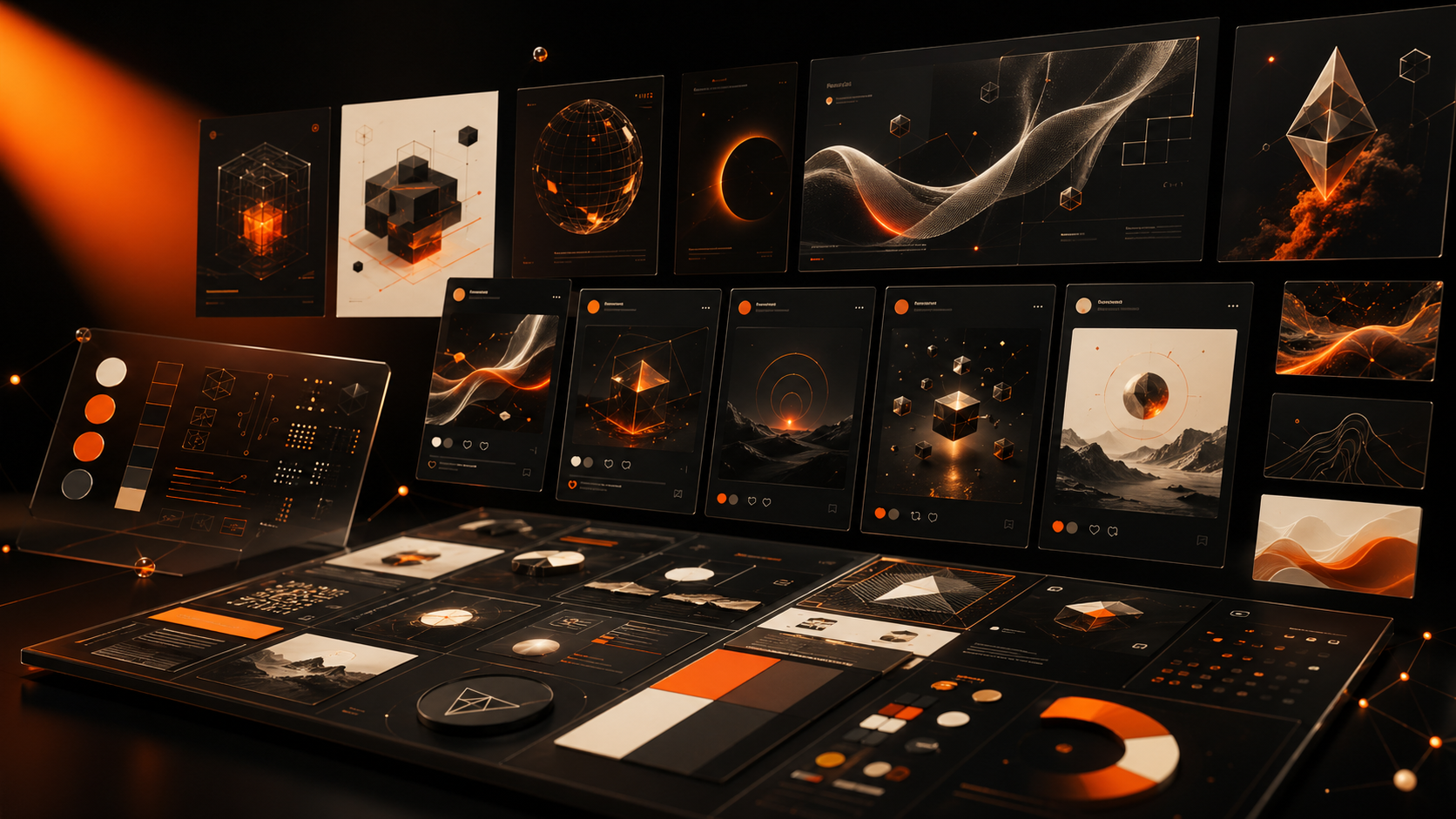
Start with recurring content formats
Most Web3 brands repeat similar content types: announcements, AMAs, partnerships, milestones, launch updates, giveaways, event graphics, and community prompts. Each format needs a recognizable structure.
When these formats are designed as a system, the team can move quickly without making the feed feel random. Templates should guide hierarchy, not trap every post in the same layout.
Make the message readable in the feed
X posts and campaign graphics compete with hundreds of other updates. The main message should be readable at a glance, with supporting details clearly separated from the headline.
Crypto social media design works best when it uses sharp contrast, disciplined type scale, and enough empty space for the important words to breathe.
Build campaign systems, not isolated posts
A mint, reveal, tournament, or partner push usually needs more than one asset. It may need a teaser, announcement, reminder, recap, and follow-up. A campaign system makes these pieces feel connected.
This is especially important for NFT campaign design, where users need to understand timing, value, access, and community context without confusion.
Design for community behavior
Web3 communities repost, remix, save, and screenshot. Strong social visuals should survive that behavior. The brand should remain identifiable even when a post appears outside its original context.
A good Web3 social media design system gives community managers speed while giving the audience a clear visual memory of the project.
FAQ
What is crypto social media design?
Crypto social media design is the creation of branded visuals for Web3 channels such as X and Discord, including announcements, campaigns, community posts, and NFT launch assets.
How often should Web3 brands update their social visuals?
The core system should stay consistent, but campaign layouts and content formats should evolve around launches, partnerships, product updates, and community events.